
The short answer: start with the task
If your team needs to understand or process procurement documents, material data and inventory movements in the ERP, materials management or SAP S/4HANA Sourcing and Procurement training is a useful starting point. If the work concerns Ariba applications for suppliers, sourcing events or buying workflows, training should address the Ariba solution actually in use. When both systems work together, the team also needs a shared understanding of the handoffs.
This is rarely a general question of which product is better. Training must fit the task, role and specific system setup. A course name alone does not tell you whether someone will be able to process orders, structure supplier selection or investigate an integration afterward.
What materials management and S/4HANA procurement cover
SAP’s S/4HANA Sourcing and Procurement learning overview includes organizational structures, master data, procurement of stock and consumable materials, and reporting and monitoring. This provides subject-matter orientation for choosing training. It does not establish which functions are enabled in your tenant.
For business users, understanding document flow may matter more than surveying configuration options. Key users often need additional control and diagnostic questions. A technical implementation workshop requires different starting knowledge and access. These groups should not receive the same agenda merely because they use the same product name.
Name the specific Ariba application first
SAP describes Ariba as a portfolio for spend and procurement management. Its learning overview distinguishes areas such as sourcing, procurement, spend analysis, contracts and supplier management. A request for beginner Ariba training should therefore be made more specific before booking: which application do you use, and what decision or task should learners perform with it?
- Evaluate suppliers and document selection criteria
- Understand a buying or approval workflow
- Interpret contract information in its business context
- Investigate a system handoff using a documented example
Shared processes need clear system boundaries
SAP documentation describes integration scenarios between S/4HANA procurement and Ariba applications. That does not mean every installation divides the work in the same way. Your workshop needs to establish where a transaction starts, which system is authoritative for each step and how statuses or errors are passed on.
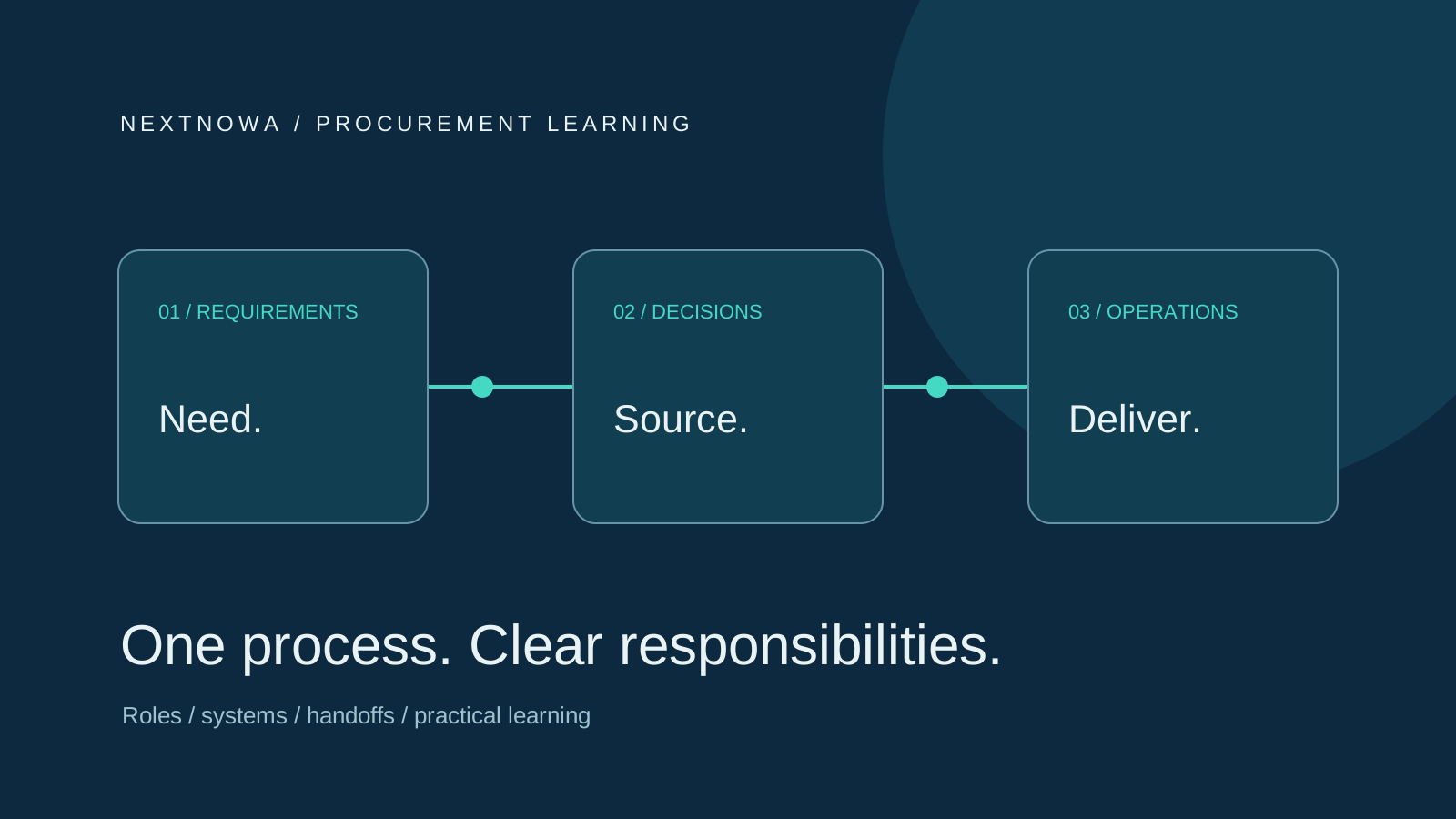
Draw one concrete workflow with its roles and systems on a single page. Mark each handoff and the information the next role needs. Put unresolved ownership questions into the briefing rather than replacing them with unsupported assumptions during training. Changes to production interfaces or permissions are not an impromptu classroom exercise.
An original practice case instead of confidential live data
One possible NextNowa practice case: a fictional company needs spare parts for two sites. The group receives invented material data, three offer variants and a deliberately incomplete status message. Participants assign requirements, decisions, ordering and feedback to the relevant roles, then explain what information is missing before the next handoff.
The outcome is a process map with reasons and control questions. An agreed practice environment allows the case to be developed technically. Without suitable system access, it remains a business-process exercise. Actual supplier records, contract terms and production credentials are not needed.
Include these details in the training request
A precise brief helps prevent a business-user group receiving configuration training or an integration team receiving only a product introduction. Describe a typical task and an exception without confidential details. Add the products, editions and organizational roles involved.
- System, edition and relevant application or app
- Participant roles and existing process knowledge
- Two or three tasks learners should perform independently afterward
- Available practice environment and permitted test data
- Language, group size and preferred time window
- Person responsible for learning acceptance and unresolved system questions
How to recognize a useful learning outcome
The team knows SAP is too vague. A testable outcome would be: participants explain an agreed procurement case, identify missing information and justify the next permitted action. The workshop can conclude with a short case review against agreed criteria. This demonstrates learning within the workshop; it is not a vendor credential.
Plan the follow-through as well: who answers questions afterward, which work instruction will be updated, and when will the team review practical use? This connects course selection with a specific workplace improvement without promising a productivity gain or a particular error rate.
Relevant NextNowa topics and next steps
NextNowa offers a materials-management topic for procurement and inventory, alongside a separate Ariba workshop outline for sourcing and purchasing workflows. State the system you use and your objective when enquiring. Content, practice environment, instructor availability, price and dates are agreed individually before booking. The manufacturer references used here do not establish a partnership or authorization.
Sources and review date
Official information checked on 29 October 2026. General information, not legal advice.